
Contemporary Christian music has become a strong voice in the music world. It connects with people looking for spiritual meaning in songs. It’s gaining popularity among young listeners fast. This makes it crucial to look at today’s Christian music movements.
By mixing new ideas with old traditions, modern worship music is changing faith-based tunes. We’ll examine how current Christian music is evolving. And we’ll see how different Christian artists bring their special touch to this genre.
Anúncios
The Rise of Contemporary Christian Music
Contemporary Christian music (CCM) has grown a lot recently. It is especially popular among young people, like Millennials and Gen Z. In 2022, they made up 39% of listeners, and this is expected to hit 45% by 2024. This increase is interesting because it happens as fewer young people engage with Christianity.
A Billboard feature showed that CCM is booming, especially on Spotify. There, CCM streams have jumped 60% globally in five years. This shows more and more young people are getting into Christian music. It might even change the future of music as we know it.
Anúncios
Demographics and Audience Growth
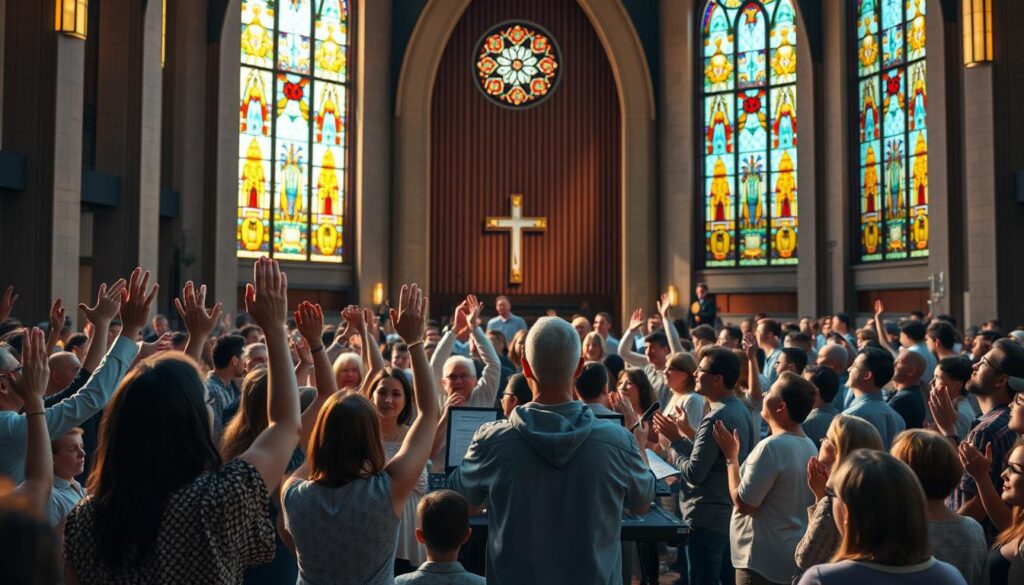
Recently, more young people are listening to Contemporary Christian music (CCM). This has made CCM more popular than ever. It’s different from the past when older listeners were more common. Now, young people want music that speaks to their life and values.
Today’s music fans come from all walks of life. CCM is mixing styles like pop, rock, and hip-hop. This mix helps draw in fans from different backgrounds. It makes the genre more appealing to a wide audience.
To keep growing, CCM needs to understand its listeners, old and new. Artists and producers have to connect with their audience in meaningful ways. As tastes change, CCM has a strong chance to succeed in the ever-changing music world.
Quality Improvement in Christian Music
Contemporary Christian Music (CCM) has changed a lot recently. There’s better quality now, thanks to new ideas and creative work. Artists like Forrest Frank and Josiah Queen are making music that feels fresh and connects with today’s listeners.
CCM is growing, and the music is getting better. Gone are the days of the same old songs. Now, there’s new talent and better tools for making music. Young people especially want music that’s real and meaningful. They look for tunes that are fun and make them think.
Thanks to these changes, Christian music is more exciting than ever. It’s drawing in folks who value deep lyrics and skillful music. We’re now looking forward to a future filled with innovative sounds. New artists can’t wait to add their voices to CCM’s ongoing story.
The Role of Technology in Music Creation
Technology has changed contemporary Christian music (CCM) a lot. Thanks to digital recording tools, artists can now produce music easily and with high quality. This change means musicians can make polished tracks at home, which boosts creativity and innovation.
Social media also plays a key role in promoting new sounds. Platforms like TikTok and Instagram let musicians share their work quickly. They reach more people and build a community. These platforms allow artists to get feedback and work together, which makes the music more diverse.
Advanced technology lets upcoming Christian artists share their faith in new musical styles. This makes CCM richer and keeps it growing with modern messages. It shows how technology will keep influencing Christian music in the future.
Christian Music’s Global Expansion
Contemporary Christian music is growing fast worldwide. Countries like Brazil, India, and South Africa are seeing big increases in interest. This boom comes from easy access to streaming services, allowing for the sharing of various music styles.
Artists worldwide add their unique cultural sounds to Christian music. This mix makes the music more interesting to a wider audience. The message of hope and faith connects with the 2.4 billion Christians around the world, crossing borders and bringing people together.
Bringing international Christian music together doesn’t just improve the genre. It also leads to artists from different places working together, creating new musical styles. This exchange of cultures keeps making Christian music more global and exciting.
Musical Diversity in Contemporary Christian Music
Contemporary Christian Music (CCM) thrives on its musical diversity. It offers a wide range of sounds, attracting many fans. Artists mix folk, rock, rap, R&B, and Afrobeats, creating a space where genres blend. This genre blending allows for various forms of artistic expression. Musicians can share their messages in ways that touch different people.
The style’s flexibility brings an assortment of eclectic sounds. This means there’s something for everyone. For instance:
- The soulful melodies of contemporary gospel.
- The rhythmic beats of hip-hop-infused worship tracks.
- Folk-inspired anthems that emphasize storytelling.
This mix of styles makes the genre more engaging for today’s audiences. They like variety and newness in music. As CCM continues to evolve, its musical diversity highlights its strength. It also shows the genre’s growth in the ever-changing world of entertainment.
Authenticity and Artistic Expression
Authenticity in CCM is key for artists to express their faith through music. Many aim to write lyrics that are personal and relatable. They share their real experiences with spirituality.
This focus on being real helps listeners feel more connected to the music. The songs create emotional bonds that feel raw and genuine.
The move away from polished productions highlights artistic truth. Songs now have unrefined sounds and natural styles. This attracts younger listeners who want music that reflects their life and faith challenges.
Artists focusing on authenticity in CCM bring hope and community. They sing about themes everyone can relate to, sharing their faith journey. This approach shows the need to stay true while exploring artistic expression. It builds strong connections with the audience.
New Sounds and Collaborations
Today’s Christian music scene is changing fast, thanks to exciting collaborations and blending genres. Musicians from different styles are joining forces, making new sounds that draw in more listeners. This change not only brings fresh tunes and rhythms but also blends cultural vibes, reaching more people.
When artists from various genres work together, they keep their faith strong while trying out new sounds. This mix lets people with different music tastes enjoy Christian themes in an interesting way. Here’s what’s happening:
- Pop, hip-hop, and country artists are teaming up in the Christian music world.
- New, unusual sounds are popping up, shaking up old genre rules.
- More people are getting into Christian music, even those who weren’t fans before.
This wave of fresh sounds and team-ups could really change Christian music for the better. By mixing different music styles, artists help more people appreciate and accept this genre.
Changing Lyrics: Depth and Meaning
Today’s Christian music is seeing a big change in lyrics. It’s more about real emotions and deep themes. Songwriters now focus on messages that truly touch people. They’re moving away from simple, old hymns to talk about real-life issues like hope and struggle.
These changes make worship more meaningful. They let people feel more connected when they sing together in church. By adding real-life thoughts to their songs, artists help others explore their faith in a new way. This makes contemporary Christian music a key tool for growing spiritually.
Listeners’ Desire for Hope and Purpose
Today, many people find that popular culture doesn’t lift their spirits. Instead, they look for hope in music. Christian music meets this need with songs full of positive messages. These songs talk about overcoming life’s hardships and provide real support. This creates a powerful spiritual connection beyond just listening to music.
Especially younger folks crave music that hits on deeper truths. They want songs that help them tackle daily challenges. The deep feelings in Christian songs feed their quest for purpose, drawing more fans. This connection boosts audience engagement. It brings people together, building a community around shared values.
The Influence of Streaming Services
Streaming platforms have changed how people listen to Christian music. Now, fans can easily find songs and listen to them anytime. These services help artists get noticed by more people and build loyal fans.
Streaming has also changed what listeners prefer. More people are choosing singles over albums now. This change pushes artists to be more creative and make songs that stand out and stay relevant.
Thanks to streaming, more people around the world are listening to Christian music. New artists can reach listeners in far-off places. This is changing the music scene, as tastes and what people like to hear evolve.
Christian Music in Worship and Evangelism
Christian music plays a vital role in worship and evangelism. It unites people in worship, creating a sense of adoration. In worship, it brings individuals together, allowing them to share their faith.
Christian music reaches diverse groups through cultural connections. It mixes biblical truths with modern styles. This approach can touch those outside traditional church settings. The emotional power of music starts deeper talks about faith, even beyond church.
- Enhances worship experiences through collective praise.
- Acts as a bridge for evangelism through music, connecting with varied audiences.
- Utilizes cultural contexts to make biblical messages relatable.
- Encourages emotional engagement, prompting spiritual reflection.
Conclusion
Christian music’s future looks promising as it adapts to modern tastes and uses new technology. It offers meaningful experiences that connect deeply with faith. This helps the music reach more people and create stronger bonds within and outside the community.
Artists now have chances to try new collaborations and sounds, pushing creative limits. By mixing old and new styles, they keep Christian music fresh and exciting.
The link between faith and art grows stronger, making a great space for sharing stories and emotions. As this relationship deepens, it helps build a lively music scene. This scene truly shows the varied lives and paths of its listeners. It promises a future for Christian music that’s both powerful and touching.
FAQ
What is Contemporary Christian Music (CCM)?
Why is CCM experiencing growth among younger audiences?
How has technology influenced contemporary Christian music?
In what ways are lyrics in CCM evolving?
How is CCM expanding on a global scale?
What role do streaming services play in the popularity of CCM?
What makes authenticity important in contemporary Christian music?
How do collaborations affect the sound of contemporary Christian music?
What are some examples of artists contributing to the genre’s quality improvement?
What significance do uplifting messages hold in CCM?
How does CCM serve in worship and evangelism?
Content created with the help of Artificial Intelligence.