Annonces
Le Playoffs NBA Les séries éliminatoires désignent le champion de la ligue chaque saison. Après les 82 matchs de la saison régulière, les meilleures équipes des conférences Est et Ouest se qualifient.
Ces équipes participent à une série de matchs à élimination directe qui culmine en finales NBA. Le vainqueur de la Conférence Est y affronte le vainqueur de la Conférence Ouest pour le titre de champion. championnat.
Publicités
Cet article explique séries éliminatoires de la NBA, le format et pourquoi les séries éliminatoires sont importantes pour les franchises, les joueurs et les fans aux États-Unis. Il partage des faits sur semis, La durée des séries et la phase de qualification moderne sont autant d'éléments qui la rendent unique. Elle illustre également ce qui fait la singularité des séries éliminatoires : une intensité accrue, un coaching plus pointu et une importance capitale pour chaque victoire comme pour chaque défaite.
Les séries éliminatoires de la NBA débutent généralement en avril, après la saison régulière. tournoi de qualification Le tournoi a lieu fin mars ou début avril et les séries éliminatoires se déroulent jusqu'en juin pour la finale. L'ajout récent de tournoi de qualification modifié semis et les stratégies d'équipe pour gagner l'avantage du terrain.
Les faits et les règles présentés ici proviennent de sources fiables telles que NBA.com, Basketball-Reference, ESPN et The Athletic. Ces sources expliquent comment… séries éliminatoires de la NBA travail et pourquoi les équipes recherchent un championnat.
Points clés à retenir
- Les séries éliminatoires de la NBA sont la compétition de fin de saison qui détermine le champion annuel de la NBA.
- Les séries éliminatoires succèdent à la saison régulière de 82 matchs et comprennent désormais une phase de qualification qui influence semis.
- Les séries éliminatoires se déroulent généralement d'avril à juin et se terminent par les finales de la NBA.
- Comprendre le format NBA permet d'expliquer les stratégies d'équipe, les ajustements des entraîneurs et les décisions relatives à l'effectif.
- Parmi les sources fiables concernant les règles et l'historique des séries éliminatoires, on peut citer NBA.com, Basketball-Reference, ESPN et The Athletic.
Explication des séries éliminatoires de la NBA
Le séries éliminatoires NBA Il s'agit d'un tournoi à élimination directe en plusieurs tours. Il fait suite à la saison régulière et désigne le champion de la ligue.
Les équipes visent à remporter quatre séries au meilleur des sept matchs : les quarts de finale de conférence, les demi-finales, la finale de conférence et la finale NBA. Les vainqueurs reçoivent le trophée Larry O'Brien.
Le format actuel comporte un tournoi de qualification. Cela affecte les équipes classées de la 7e à la 10e place dans chaque conférence et offre un chemin différent vers le tableau final à 16 équipes.
Définition et objectif des séries éliminatoires
Les séries éliminatoires récompensent les meilleures équipes pour leur succès constant. Elles mettent les équipes à l'épreuve lors de confrontations à haute pression, organisées en séries.
Les victoires en séries éliminatoires permettent de reprendre les décisions concernant l'effectif et l'entraîneur. Les joueurs se forgent une légende et les franchises en tirent des leçons. championnat chances selon les performances en séries éliminatoires.
Comment les séries éliminatoires s'intègrent au calendrier de la saison NBA
La saison NBA débute par la pré-saison en octobre. La saison régulière se déroule d'octobre à avril, chaque équipe disputant 82 matchs.
Le tournoi de qualification a lieu fin mars et début avril. Les séries éliminatoires se déroulent ensuite d'avril à juin.
Les séries éliminatoires offrent davantage de temps de repos entre les matchs. Les équipes se concentrent davantage sur la récupération, l'observation et la stratégie que pendant les déplacements de la saison régulière.
Les résultats des séries éliminatoires modifient les plans de l'intersaison. Un parcours exceptionnel influence le marché des agents libres, les choix des entraîneurs et la stratégie des directions sportives en matière de repêchage et d'échanges.
Les équipes tirent des revenus de la vente des billets pour les séries éliminatoires et des droits télévisés. Ces revenus influencent leurs décisions en matière de recrutement.
Pourquoi les séries éliminatoires sont importantes pour les équipes, les joueurs et les supporters
Pour les équipes, les séries éliminatoires sont synonymes d'argent et de prestige. La victoire valide les stratégies de gestion et assure la sécurité d'emploi des entraîneurs et des dirigeants.
Les joueurs considèrent les succès en séries éliminatoires comme essentiels à leur héritage et à leur pouvoir de négociation contractuelle. Les championnats et les performances marquent souvent leur carrière.
Les matchs éliminatoires offrent aux fans encore plus d'émotions. Les rivalités s'intensifient, les histoires se développent et des moments inoubliables se produisent.
Les confrontations classiques, comme les Lakers contre les Celtics et les parcours victorieux des Warriors en championnat, montrent comment les séries éliminatoires façonnent les souvenirs et les époques des fans.
Les séries éliminatoires diffèrent du jeu régulier. La défense est plus serrée et le jeu en demi-terrain devient crucial.
Les ajustements tactiques peuvent faire la différence entre les équipes et leurs vainqueurs. Les séries éliminatoires de la NBA exigent des équipes qu'elles fassent preuve à la fois de talent et d'une stratégie intelligente pour remporter le titre.
Comment fonctionne le format des séries éliminatoires de la NBA
Le Format NBA Ce format combine le classement de la saison régulière avec une phase de qualification courte et cruciale. Celle-ci se déroule avant le début des séries éliminatoires traditionnelles. Comprendre ce système permet aux supporters et aux équipes de saisir l'importance des matchs de fin de saison.
Il explique également comment se déroulent les séries éliminatoires, du classement initial aux matchs de poule.
Mécanismes des tournois de qualification et impact du classement
Le tournoi de qualification oppose les équipes classées de la 7e à la 10e place de chaque conférence. Le format habituel oppose les équipes classées 7e et 8e, le vainqueur obtenant la 7e place.
Le vainqueur du match 9 contre 10 affronte ensuite le perdant du match 7 contre 8 pour la 8e place. Les ligues peuvent adapter ce système, mais il est aujourd'hui largement répandu.
Ce format modifie les tactiques de fin de saison. Les équipes visent à terminer parmi les six premières pour éviter complètement le tournoi de qualification.
Les entraîneurs doivent trouver un équilibre entre la mise au repos des joueurs et le risque de se retrouver dans des équipes qui devront disputer des matchs éliminatoires supplémentaires.
Grâce au tournoi de qualification, davantage d'équipes restent compétitives en fin de saison. Cela stimule les audiences télévisées, les ventes de billets et les recettes.
Cela permet également de maintenir un fort intérêt des fans sur de nombreux marchés.
Règles relatives à la durée des séries et à l'avantage du terrain
Tous les tours des séries éliminatoires se jouent au meilleur des sept matchs. Cela s'applique au premier tour, aux demi-finales de conférence, aux finales de conférence et aux finales NBA.
Les séries plus longues récompensent la profondeur de l'équipe et les ajustements intelligents effectués en cours de série plutôt que les performances ponctuelles.
Avantage du terrain La plupart des séries suivent un schéma 2-2-1-1-1. L'équipe la mieux classée accueille les matchs 1, 2, 5 et 7.
L'équipe la moins bien classée accueille les matchs 3, 4 et 6. La finale se déroule selon le même format de sept matchs. L'équipe ayant le meilleur bilan en saison régulière obtient l'avantage du terrain.
Les critères de départage en cas d'égalité de bilan incluent les résultats des confrontations directes, le statut de leader de division et les résultats de la conférence.
D'autres règles de départage de la NBA s'appliquent également. Ces règles déterminent le classement en cas d'égalité de points.
Différences entre les matchs de saison régulière, les matchs de qualification et les matchs éliminatoires
L'intensité augmente fortement dans le séries éliminatoires de la NBA. Les matchs éliminatoires de basketball présentent une défense plus serrée et un jeu plus physique que les matchs de saison régulière.
Les arbitres et les entraîneurs adaptent leurs méthodes à ce changement.
Les tactiques d'entraînement évoluent. Les rotations se raccourcissent et les joueurs de complément se voient souvent confier de nouvelles responsabilités. Les équipes privilégient les systèmes de jeu en demi-terrain et effectuent des changements tactiques plus rapides à chaque match.
Le calendrier et les enjeux varient selon l'étape. Les matchs de qualification sont à élimination directe. Les séries éliminatoires permettent aux équipes de corriger leurs erreurs grâce à une formule au meilleur des sept matchs.
Cela change la façon dont les entraîneurs gèrent le temps de jeu des joueurs et planifient les stratégies de série.
Les fluctuations statistiques ont plus d'importance dans les séries courtes. Les périodes de réussite ou de mauvaise passe peuvent rapidement changer le cours des choses.
Les joueurs de complément prennent souvent plus d'importance lorsque les titulaires font face à des défenses plus coriaces et à des stratégies plus ciblées.
Les confrontations et les enjeux clés qui définissent les séries éliminatoires
Le séries éliminatoires de la NBA L'histoire prend vie grâce à des confrontations chargées d'histoire, de stars et de stratégies tactiques. Les fans suivent les récits des finales passées, les actions emblématiques et les moments forts. rivalités de conférence. Ces scénarios influencent la manière dont les équipes se préparent, dont les médias couvrent les matchs et comment la pression s'accumule sur les joueurs et les entraîneurs.
Rivalités de conférence et affrontements historiques en séries éliminatoires
Certaines rivalités se répètent à chaque décennie et marquent les playoffs NBA. La rivalité entre les Boston Celtics et les Los Angeles Lakers s'étend sur de nombreuses finales et des moments emblématiques. La rivalité récente entre les Golden State Warriors et les Cleveland Cavaliers a créé un suspense intense qui influence les attentes.
Les rivalités régionales, comme celle entre les Celtics et les 76ers de Philadelphie, intensifient les premiers tours. L'histoire compte, car les victoires par balayage, les défaites lors du match 7 et les paniers décisifs influencent la confiance des équipes. Lors des confrontations suivantes, les résultats passés ajoutent de la pression et alimentent les débats entre les supporters. Les articles de presse donnent à chaque match une importance qui dépasse le simple score.
Les joueurs vedettes et l'influence des performances individuelles sur l'issue des séries
Les superstars donnent le ton lors des séries éliminatoires. Des joueurs comme LeBron James, Stephen Curry, Kevin Durant et Giannis Antetokounmpo peuvent renverser le cours d'une série en une seule soirée de gloire. Un adresse au tir irréprochable, une défense intraitable et des actions décisives peuvent faire basculer le match et obliger les adversaires à s'adapter.
Les joueurs de complément sont tout aussi importants. Les spécialistes défensifs et les ailiers 3-et-D modifient les confrontations et créent de l'espace pour les stars. Les points marqués en sortie de banc et les joueurs complets et fiables aident souvent les équipes avec un effectif fourni à remporter des séries serrées. Les effectifs équilibrés et profonds battent souvent les équipes qui dépendent d'un seul marqueur.
Ajustements de coaching et batailles tactiques en séries éliminatoires
Les entraîneurs remportent des séries grâce à des changements judicieux. Gregg Popovich, Steve Kerr et Erik Spoelstra modifient les rotations, exploitent les faiblesses des adversaires et ajustent leurs défenses. De petits ajustements peuvent avoir un impact considérable dans une série au meilleur des sept matchs.
Les tactiques consistent notamment à permuter les défenseurs, à modifier la couverture sur pick-and-roll et à utiliser des zones ou des prises à deux pour casser le rythme adverse. L'intégration de titulaires en défense, l'augmentation du temps de jeu des remplaçants ou la modification des tactiques en fin de match peuvent s'avérer décisives. Ces décisions ont souvent pour effet de renverser la dynamique du match et d'influencer l'issue des confrontations.
- Les changements majeurs dans une confrontation commencent souvent par un ajustement tactique qui limite le confort d'une star.
- La profondeur et la clarté des rôles permettent aux entraîneurs d'organiser les confrontations plus efficacement.
- Le cours d'une série repose souvent sur une seule contre-attaque réussie ou un changement de composition d'équipe.
Parcours vers les finales NBA et contexte du championnat
Le parcours depuis le pourboire initial jusqu'au Finales NBA Cette phase teste la profondeur, la santé et la stratégie des joueurs. Les équipes qualifiées doivent remporter plusieurs séries au meilleur des sept matchs au sein de leur conférence. Une finale détermine ensuite le champion.
Comment les équipes progressent dans les tableaux de conférence
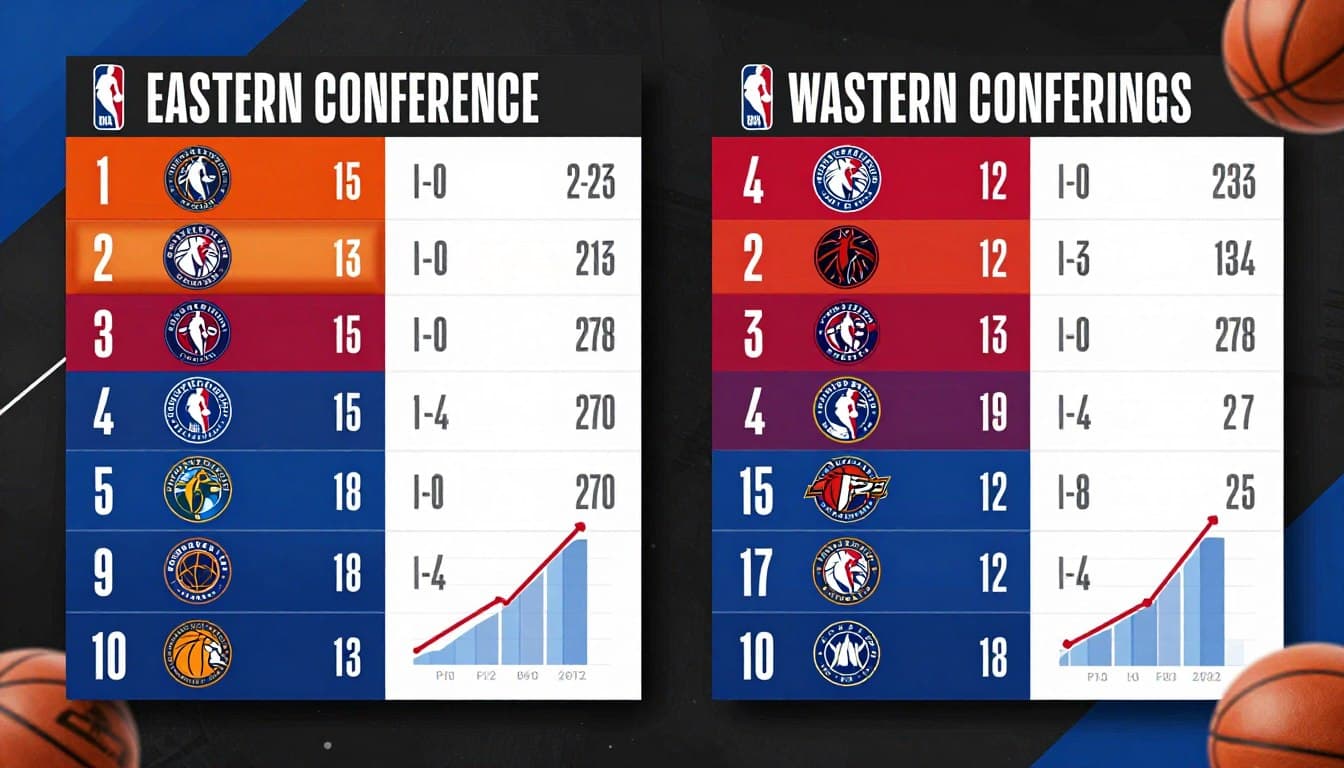
À l'issue des matchs de qualification, huit équipes par conférence sont classées de 1 à 8 et participent à un tableau classique. Le premier tour, les demi-finales de conférence et la finale de conférence permettent d'éliminer les adversaires. Une équipe de l'Est et une de l'Ouest sont qualifiées.
À chaque tour, les confrontations opposent le meilleur joueur restant au moins bon. L'avantage du terrain est déterminé par les résultats de la saison régulière. Chaque match de saison régulière peut influencer le classement final. Parcours vers les finales NBA.
Pour survivre, il faut un effectif étoffé, des rotations intelligentes et des confrontations adaptées. Des entraîneurs comme Gregg Popovich et Steve Kerr démontrent comment des ajustements dans les séries peuvent faire basculer le résultat. Ces changements sont essentiels pour les équipes lors des longs parcours en séries éliminatoires.
Que signifie l'accès aux finales NBA pour les franchises ?
Faire le finales NBA Elle accroît la valeur de la marque et les revenus d'une franchise provenant de la billetterie, des droits médias et des produits dérivés. Une présence prolongée en séries éliminatoires améliore son attractivité auprès des agents libres et des commanditaires.
Une participation à une finale peut marquer l'histoire. Les équipes qui atteignent le championnat rejoignent un cercle très fermé, intimement lié à la légende et à la mémoire des supporters.
Le succès en séries éliminatoires justifie les décisions prises par la direction, comme les repêchages, les échanges et les embauches d'entraîneurs. Cette validation influence souvent la construction et la planification futures de l'effectif.
Exemples notables de parcours d'équipes vers le championnat
- Les Golden State Warriors de 2015 : un noyau dur bâti grâce à la continuité des choix de repêchage et à des ajouts judicieux a lancé une dynastie moderne.
- Cleveland Cavaliers 2016 : LeBron James et ses coéquipiers ont surmonté un déficit de 3-1 pour remporter le championnat pour Cleveland.
- Les Pistons de Detroit de 2004 : une équipe privilégiant la défense a renversé une équipe des Lakers de Los Angeles constellée de stars pour remporter le titre.
- Raptors de Toronto 2019 : L’arrivée de Kawhi Leonard en milieu de saison et ses performances en séries éliminatoires ont mené au premier championnat canadien.
Ces parcours illustrent différentes voies vers le titre. Certaines équipes progressent grâce à des années de recrutement et de construction d'une culture d'entreprise solide. D'autres remportent le titre après des acquisitions clés ou des changements en cours de saison.
Parmi ses caractéristiques constantes, on peut citer l'équilibre bilatéral, la stabilité de l'encadrement et les contributions opportunes des joueurs de rôle.
Questions fréquentes et idées fausses sur les séries éliminatoires de la NBA
Les fans se demandent souvent comment fonctionnent réellement les séries éliminatoires de la NBA. Ce guide concis clarifie les points suivants : classement, stratégies de repos et dynamique des équipes.
Clarification des règles relatives au classement, aux départages et à l'avantage du terrain.
Le classement est établi en fonction des résultats de la saison régulière. En cas d'égalité, la NBA se base d'abord sur les confrontations directes. Ensuite, si nécessaire, elle prend en compte les résultats de la conférence et le statut de leader de division.
L'avantage du terrain est accordé à l'équipe ayant le meilleur bilan en saison régulière. Cette règle s'applique également aux finales, même si les équipes proviennent de conférences différentes.
De nombreux fans pensent que les vainqueurs de division sont automatiquement classés premiers. Ce n'est plus le cas. Le système privilégie désormais le bilan général et les confrontations directes plutôt que les titres de division.
Comprendre le repos des joueurs, la gestion de la charge de travail et la préparation aux séries éliminatoires
Gestion de la charge Cela signifie que les équipes font reposer leurs stars en fin de saison régulière afin de réduire les risques de blessure. Des équipes comme les Lakers et les Warriors sont confrontées à ce débat.
Le repos est bénéfique aux joueurs, mais peut nuire au rythme de l'équipe. Les entraîneurs doivent trouver un équilibre entre la prévention des blessures, l'optimisation des rotations et la préparation des stratégies de repérage des adversaires.
La préparation aux séries éliminatoires dépend souvent des stratégies défensives, du repérage des joueurs et de la gestion des rotations. Les équipes expérimentées gèrent généralement mieux ces aspects que les équipes plus jeunes.
Mythes concernant l'élan, les surprises et le concept de “ n'importe quelle série ” en séries éliminatoires
L'élan émotionnel compte. Mais la santé des joueurs, les confrontations directes et la profondeur de l'effectif sont des indicateurs bien plus fiables des résultats.
Un match isolé peut réserver des surprises. Mais les séries au meilleur des sept matchs réduisent l'aléatoire. Pourtant, les Rockets de 1995 et les Mavericks de 2011 ont créé la surprise en battant des équipes mieux classées grâce à des confrontations favorables et à des performances exceptionnelles.
L'expression “ toute série peut basculer ” est vraie dans les matchs serrés. Mais ce sont les équipes solides et la régularité qui mènent aux titres, bien plus que les courtes séries de victoires.
Conclusion
Le Explication des séries éliminatoires de la NBA En résumé, il s'agit d'un mélange harmonieux de structure et de spectacle. Les séries éliminatoires de la NBA débutent par le classement et un tournoi de qualification qui modifie la position des équipes. Elles se poursuivent ensuite avec des séries au meilleur des sept matchs où l'avantage du terrain et la profondeur de l'effectif sont déterminants.
Ce format récompense la régularité en saison régulière. Il crée également des confrontations à forts enjeux qui mettent à l'épreuve chaque aspect de l'effectif.
Les séries éliminatoires en basketball sont différentes car les ajustements des entraîneurs, la santé des joueurs et les performances des vedettes influencent davantage les résultats qu'en saison régulière. Les équipes qui atteignent les séries éliminatoires finales NBA L'alliance d'un effectif riche et d'une rotation intelligente des joueurs, ainsi que de performances exceptionnelles au bon moment, détermine souvent qui peut prétendre au titre.
Comprendre les playoffs NBA exige à la fois des connaissances techniques et une sensibilité aux récits : rivalités, retournements de situation et moments décisifs. Les statistiques expliquent les confrontations ; les histoires expliquent l’importance d’une série. Ensemble, elles démontrent pourquoi les playoffs NBA sont le lieu où les stratégies sont mises à l’épreuve et où les réputations se forgent.
Pour une couverture continue et une analyse des matchs, suivez les sources officielles comme NBA.com, ESPN et The Athletic. Regardez les matchs des séries éliminatoires en prêtant attention aux confrontations directes, aux rotations et aux ajustements tactiques des entraîneurs. Cette approche vous permettra d'approfondir votre compréhension du jeu. format NBA Elle produit du suspense et couronne finalement une équipe championne.
Contenu créé à l'aide de l'intelligence artificielle.