Annonces
Cet article offre un aperçu clair et factuel de Image de marque de la Coupe du Monde 2026. Nous utilisons les communiqués officiels de la FIFA, les analyses de studios de design et les rapports de médias tels que The Guardian, BBC Sport, ESPN et Design Week.
Nous incluons des commentaires provenant de sources spécialisées telles que Creative Review et Brand New lorsque cela est pertinent.
Publicités
Les lecteurs auront une vision claire de Logo FIFA 2026 et l'ensemble Identité visuelle de la Coupe du Monde. L'accent est mis sur des conseils pratiques destinés aux diffuseurs, aux détenteurs de droits et aux équipes de merchandising. Les concepteurs chargés d'appliquer les marque officielle L'ensemble des plateformes et des lieux en bénéficieront également.
L'article traite de la révélation du logo officiel, charte graphique, les thèmes visuels de la ville hôte, les systèmes de couleurs et accessibilité. Il se termine par une présentation de la réception et des avis d'experts. Chaque section indique ce qu'il faut utiliser, ce qu'il faut éviter et comment l'identité visuelle doit apparaître. graphiques de diffusion, les stades et les produits sous licence.
Notre langage est direct et axé sur les décisions. Nous évitons les exagérations et les affirmations non vérifiées. Notre objectif est de fournir des informations rapides et fiables sur Image de marque de la Coupe du Monde 2026, le Logo FIFA 2026, et comment l'identité visuelle se façonne marque officielle des choix.
Points clés à retenir
- Image de marque officielle Les détails proviennent des communiqués de la FIFA et des principaux partenaires de conception ; utilisez ces ressources en priorité.
- Le Logo FIFA 2026 ancre le identité du tournoi à travers les campagnes de diffusion, de produits dérivés et de campagnes urbaines.
- Les éléments visuels de la ville hôte ajouteront des motifs locaux, mais doivent respecter les règles. charte graphique par souci de cohérence.
- Palette de couleurs et accessibilité Le respect des règles est essentiel pour une bonne lisibilité des graphismes à l'écran et de la signalétique dans les stades.
- Consultez les analyses et commentaires de référence du secteur pour obtenir des mises à jour et des conseils de mise en œuvre.
Logo officiel de la FIFA 2026 : présentation, éléments et symbolisme
Le logo de la FIFA 2026 a été dévoilé lors d'un événement spécial destiné aux publics mondiaux et régionaux. La FIFA a annoncé une date de présentation officielle, puis a diffusé le logo localement aux États-Unis, au Canada et au Mexique. Les communiqués de presse mentionnaient… Créatif FIFA L'équipe et ses partenaires, en fixant des objectifs clairs pour unifier les trois hôtes et assurer une visibilité à la télévision et dans les stades.
Chronologie de la révélation du logo et processus créatif de la FIFA
Le projet a débuté par des esquisses conceptuelles et a ensuite fait l'objet d'examens auprès de la FIFA et des comités locaux. Les concepteurs se sont concentrés sur l'adaptation du logo aux supports numériques et aux produits dérivés. Des réunions ont permis de recueillir les commentaires des diffuseurs et des équipes des sites de diffusion afin de répondre aux exigences techniques avant l'approbation officielle et le dépôt de la marque.
Éléments visuels clés : formes, typographie et motifs
Le logo principal associe un emblème circulaire à des éléments subtils évoquant une carte et un trophée. Les logos secondaires comprennent des versions simplifiées et un logotype horizontal. La typographie adopte un style géométrique et condensé, optimisé pour les petits formats et une lisibilité aisée sur appareils mobiles.
Symbolisme des couleurs et des formes
Les couleurs représentent les trois pays hôtes, comme indiqué clairement. Les formes évoquent le mouvement, la connexion et le nouveau format du tournoi à 48 équipes. Les concepteurs ont créé des éléments graphiques modulaires inspirés de l'art des villes hôtes, en évitant d'utiliser des symboles culturels sans autorisation.
Réactions initiales du public et des médias au logo
Les réactions ont oscillé entre éloges pour la clarté et critiques sur le minimalisme. Les réseaux sociaux ont rapidement suscité l'engagement et le débat. Les médias spécialisés en design ont analysé la lisibilité et l'originalité du logo, en le comparant à ceux des tournois précédents.
La presse a relayé les éloges et les critiques, alimentant ainsi le débat autour du logo. Les journalistes ont relevé des litiges concernant la propriété intellectuelle et la similarité visuelle. Après la révélation du logo, la FIFA a apporté des précisions sur sa marque déposée et des directives d'utilisation.
Image de marque de la Coupe du Monde 2026
Le Image de marque de la Coupe du Monde 2026 Il s'agit d'un système visuel complet. Il comprend un logo, une typographie, une palette de couleurs, un style photographique, des animations et des symboles urbains. Ce système reflète l'envergure d'un tournoi à 48 équipes réparties sur trois pays hôtes et permet une expression locale.
Comment le mot-clé principal s'intègre à l'identité du tournoi
Cette identité visuelle allie une portée mondiale à une touche locale. Des éléments graphiques généraux assurent une image unifiée aux diffuseurs et aux sponsors. Des logos localisés permettent à Miami, Vancouver et aux villes hôtes mexicaines d'ajouter des spécificités culturelles.
Les parties prenantes utilisent l'identité visuelle de la Coupe du Monde 2026 pour assurer la cohérence des éléments graphiques des stades, des programmes télévisés et des campagnes menées dans les villes.
Charte graphique : utilisation cohérente sur toutes les plateformes
Le manuel officiel de la marque établit des règles claires. Il définit l'utilisation du logo, les espaces libres, la taille minimale et les traitements interdits. Les spécifications de couleur incluent Pantone, CMJN, RVB et HEX.
Les règles d'imagerie définissent la composition et le ton des photos principales et des visuels pour les réseaux sociaux. Les règles de la plateforme encadrent les éléments tels que les bandeaux inférieurs des programmes télévisés, les modèles pour les réseaux sociaux, les étiquettes de produits et la signalétique dans les stades.
Les accords de licence et la surveillance des marques garantissent la conformité. Les approbations des tiers suivent un processus documenté.
Intégration avec le système de conception de la FIFA et l'apparence officielle
L'identité visuelle est compatible avec les outils FIFA existants pour les besoins numériques et de diffusion. Les éléments graphiques à l'écran doivent s'afficher de manière fluide sur les écrans LED des stades et les applications mobiles. Les SVG adaptatifs et les directives de mouvement évitent la surcharge visuelle et garantissent la lisibilité sur les petits écrans.
Les actifs comprennent accessibilité Des notes, des ratios de contraste, des suggestions de texte alternatif et un balisage compatible avec les lecteurs d'écran sont inclus. Ceci garantit la cohérence des présentations télévisées et en ligne avec le système de conception et les normes d'accessibilité de la FIFA.
Conséquences pour la conception et l'octroi de licences de produits dérivés officiels
Les règles de la marque encadrent les produits dérivés. Les versions de logo autorisées, les coloris approuvés et l'emplacement des écussons sur les tenues sont spécifiés. Les éditions spéciales liées aux thèmes des villes hôtes suivent les mêmes procédures d'approbation que les produits standards.
Les titulaires de licence doivent soumettre des maquettes pour examen. La FIFA définit les normes de qualité relatives aux matériaux et à la fabrication. Les conditions commerciales couvrent le co-branding, les redevances et les mesures anti-contrefaçon telles que les étiquettes uniques ou les hologrammes.
Ces contrôles protègent l'intégrité des produits officiels tout en soutenant les partenariats générateurs de revenus.
Conception des villes hôtes et thèmes visuels localisés
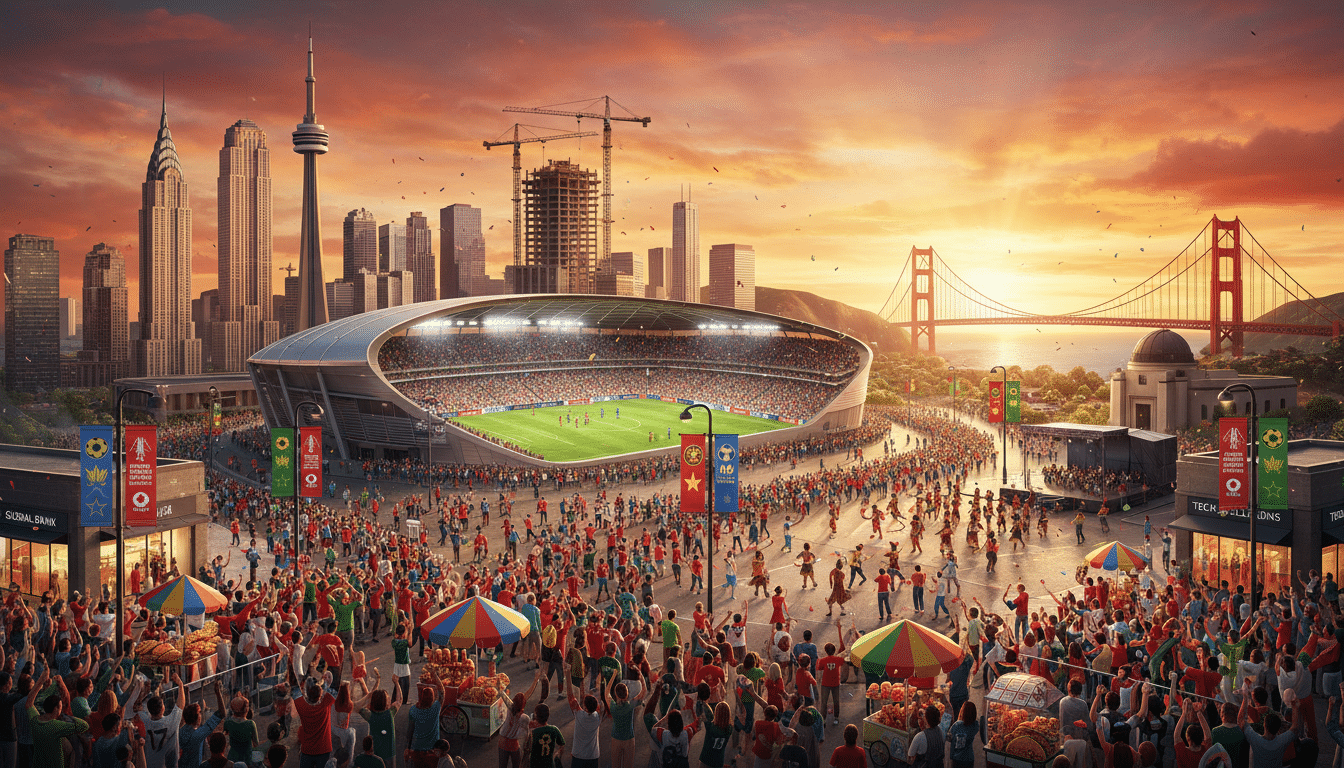
Le conceptions de villes hôtes Ce programme permet à chaque site d'exprimer sa culture locale tout en préservant l'image internationale de la compétition. La FIFA autorise l'émergence d'identités propres à chaque ville, enrichissant ainsi le système officiel. L'objectif est de célébrer la culture locale, de fournir des supports pour la billetterie et la signalétique, et de valoriser le message touristique sans nuire à l'image du tournoi.
Art Déco Miami : approche et exemples en matière de stratégie de marque urbaine
Art déco Miami Ce style graphique utilise des formes géométriques, des couleurs pastel et des néons inspirés de l'architecture de Miami Beach. Les designers emploient des polices de caractères épurées et des motifs répétitifs qui imitent les façades des bâtiments. On les retrouve sur les banderoles des stades, les habillages de transports en commun, les zones d'accueil et les panneaux de signalisation faisant référence à Collins Avenue.
Les agences locales de design, comme les services de design municipaux, collaborent avec les groupes culturels pour valoriser le patrimoine culturel à travers des éléments graphiques pertinents. Ces partenariats permettent de créer des designs cohérents pour les produits dérivés et les espaces dédiés aux supporters, tout en préservant une ambiance urbaine moderne.
Art autochtone de Vancouver : collaboration et signification
L'art autochtone de Vancouver Ce processus comprend des discussions communautaires et des accords juridiques avec les conseils autochtones. Les projets mettent l'accent sur les droits, les crédits et l'utilisation équitable des motifs. Les styles des Salish de la côte et d'autres cultures locales sont présents dans les cérémonies et les supports graphiques des événements.
Les équipes de conception sont soucieuses du respect des cultures. Elles intègrent le partage des revenus et des mentions légales claires. Les musées et les supports de communication communautaires utilisent ces modèles pour créer des expériences locales et enrichissantes pour les visiteurs.
Motifs aztèques mexicains : un héritage revisité dans le design moderne
L'utilisation de motifs aztèques pour créer des designs modernes s'inspire de formes préhispaniques. Des contrastes de couleurs éclatants et des motifs répétés ornent les équipements des supporters, les intérieurs des stades et les programmes imprimés. Les designers préservent l'intégrité du motif grâce à une typographie claire et un redimensionnement numérique adapté.
Les collaborations incluent souvent des groupes culturels mexicains afin d'éviter toute utilisation abusive. Cette démarche permet de préserver l'authenticité du patrimoine tout en répondant aux besoins de diffusion et de vente.
Comment le design des villes hôtes contribue à l'esthétique du tournoi
Image de marque de la ville Les ressources s'intègrent à un système modulaire utilisé pour la billetterie, les transports et les événements des sponsors. Ce système permet à chaque ville d'affirmer son identité locale tout en respectant l'esthétique de la Coupe du Monde. Des procédures d'approbation garantissent le respect des règles de la marque et la cohérence visuelle.
Les thèmes locaux créent des expériences uniques pour les supporters dans chaque stade. Ils forment de petites campagnes qui s'intègrent parfaitement à l'esprit global du tournoi. Il en résulte des histoires variées propres à chaque ville, tout en conservant l'impression d'un seul et même événement.
Couleurs de la Coupe du Monde, choix de palettes et application
La palette de couleurs de la marque guide chaque point de contact visuel. Elle définit le ton et garantit la clarté sur les écrans et dans les stades. Cela contribue à maintenir une image cohérente. Identité visuelle de la Coupe du Monde sur toutes les plateformes.
Nous expliquons ci-dessous les caractéristiques techniques, les règles d'accessibilité et les applications pratiques, tant en contexte de diffusion qu'en milieu urbain.
Palette primaire
- Bleu FIFA — Pantone 286 C; CMYK 100,66,0,2; RGB 0,51,160; HEX #0033A0.
- Accent doré — Pantone 123 C; CMYK 0,24,94,0; RGB 255,199,44; HEX #FFC72C.
- Nuit neutre — Pantone Cool Gray 11 C; CMYK 0,2,6,60; RGB 77,76,82; HEX #4D4C52.
Accents secondaires et accents de la ville hôte
- Bleu sarcelle côtier pour les variantes de Miami — CMJN 85,0,30,0 ; RVB 0,160,153 ; HEX #00A099.
- Rouge érable pour les touches de Toronto/Vancouver — CMJN 0,90,75,10 ; RVB 200,16,46 ; HEX #C8102E.
- Orange coucher de soleil pour les éléments de Mexico City — CMYK 0,55,95,0 ; RGB 255,115,0 ; HEX #FF7300.
Raisonnement
Les couleurs primaires assurent une visibilité optimale sur les flux HD et 4K. Le bleu ancre l'identité visuelle. L'or symbolise le prestige et les trophées.
Les voix neutres garantissent la lisibilité des textes et des données. Les accents locaux témoignent d'un respect culturel tout en préservant… choix de palette Cohérent pour la cohérence de la marque.
Accessibilité et contraste
- Le texte sur fond coloré doit respecter les normes WCAG AA minimales de 4,5:1 pour le texte normal et de 3:1 pour le texte de grande taille.
- Les éléments d'interface utilisateur utilisent des états à contraste élevé sur mobile. Les boutons et les icônes passent à des contours à contraste maximal en faible luminosité ou en extérieur.
- Les concepteurs valident l'accessibilité aux personnes daltoniennes grâce aux tests Daltonize et Coblins. Leur combinaison permet d'éviter de dépendre du rouge et du vert pour les signaux essentiels.
Adaptations numériques et mobiles
Sur les petits écrans, les dégradés se simplifient en aplats de couleurs. Les icônes utilisent des traits plus épais et des espaces négatifs. Graphiques de diffusion Utilisez des SVG vectoriels pour préserver la fidélité des couleurs sur tous les appareils.
application graphique de diffusion
- Les barres de score utilisent une base bleue FIFA avec des accents dorés pour les scores et les chronomètres.
- Les bandeaux inférieurs et les fiches statistiques utilisent la technologie Neutral Night pour les blocs de texte afin de garantir la lisibilité des chiffres sous différentes expositions de l'appareil photo.
- La séparation des sponsors utilise des calques translucides et des bandes de couleur fixes. Cela évite les conflits visuels et respecte les marques des partenaires.
Utilisation du stade et sur site
- Les panneaux LED périphériques utilisent des couleurs primaires saturées optimisées pour les caméras de diffusion. Cela évite les scintillements et les variations de couleur sous l'éclairage des stades.
- L'orientation repose sur des paires à contraste élevé et de grands pictogrammes pour une lecture rapide par les utilisateurs mobiles.
- Les revêtements des sièges et les éléments en bord de terrain utilisent autant que possible des finitions mates afin de réduire les reflets sur l'écran de télévision.
Production urbaine et imprimée
- Les panneaux d'affichage et les habillages de transport utilisent les valeurs CMJN avec des épreuves à gamme étendue. Celles-ci correspondent aux références Pantone pour l'impression grand format.
- Les installations d'art public mettent en valeur les accents de la ville hôte tandis que la palette primaire conserve le Identité visuelle de la Coupe du Monde.
- Les fichiers de gestion des couleurs et les spécifications des fournisseurs sont nécessaires pour garantir la fidélité des couleurs entre les matériaux et les fournisseurs.
Réception, controverses et perspectives de l'industrie
Le Réaction au logo de 2026 Les réactions variaient selon les plateformes. Sur Twitter et Instagram, les fans ont salué sa clarté et son adaptabilité à la diffusion. Sur les forums de fans, d'autres utilisateurs l'ont jugée sûre et prévisible.
Les principaux médias ont souligné l'excellente lisibilité du logo sur les petits écrans. Leurs avis étaient partagés quant à l'originalité du logo.
Ventilateur Les avis étaient partagés entre l'appréciation de l'accessibilité et la déception face à l'audace du système. Les concepteurs ont salué son évolutivité et sa flexibilité d'utilisation dans différentes villes hôtes.
Réactions des médias L'accent a été mis sur la façon dont la marque fonctionne dans les graphismes en direct et les flux sociaux.
Des débats sur les marques et la culture ont rapidement émergé après la révélation. Des rapports ont fait état de recours et de questions publiques concernant l'utilisation de motifs autochtones dans certains designs locaux. La FIFA a déclaré avoir entamé des consultations. Les équipes juridiques ont examiné les documents relatifs au merchandising et aux licences.
Lorsque des problèmes de propriété intellectuelle ont affecté la diffusion, les chaînes ont retardé la diffusion de certains contenus sous licence. Les organisateurs ont modifié les crédits artistiques locaux. Ils ont également publié des notes complémentaires pour répondre aux préoccupations concernant les sources culturelles.
professionnels du branding Dans Creative Review et Design Week, des critiques constructives ont été formulées. Les auteurs ont salué la qualité des choix typographiques et souligné la nécessité de tester les animations. Ils ont également mis en garde contre les difficultés liées au déploiement du système à l'échelle des stades et des villes.
- Ce qui a fonctionné : une hiérarchie d’échelle claire et des règles de couleur cohérentes.
- Points à améliorer : une voix locale distincte sans rompre la cohérence.
- Recommandations aux titulaires de licence : tester le contraste des couleurs sur les panneaux LED et confirmer les règles relatives aux espaces de sécurité pour les superpositions.
Prédire l'effet sur identité du tournoi Cela exige de la vigilance. Ce système flexible peut bien vieillir s'il est géré avec rigueur. Mais il risque de paraître impersonnel si une standardisation excessive étouffe les spécificités locales.
Les avantages à long terme pour les villes hôtes incluent le développement du tourisme culturel. Ceci peut se concrétiser grâce à des collaborations bien documentées. Les parties prenantes doivent obtenir les autorisations nécessaires au plus tôt et tester les ressources en situation réelle. Elles doivent également documenter les partenariats avec les artistes afin de préserver l'intégrité culturelle et la clarté de l'image de marque.
Conclusion
L'image de marque de la Coupe du Monde 2026 vise à créer une identité claire. identité du tournoi. Elle allie une esthétique globale unifiée à une touche locale. L'identité visuelle officielle combine des formes simples, des couleurs choisies avec soin et une typographie facile à lire.
Ces choix de conception fonctionnent bien sur les écrans mobiles, les diffusions télévisées et dans les stades. charte graphique et le Système de conception FIFA Veillez à ce que l'identité visuelle soit cohérente et lisible partout.
Les thèmes propres à la ville hôte enrichissent le système sans le perturber. L'Art déco de Miami, l'art autochtone de Vancouver et les motifs aztèques du Mexique ajoutent une touche locale à l'identité fondamentale.
L’accessibilité, le contraste et la couleur sont essentiels lors de l’adaptation de conceptions locales pour les écrans et la signalétique. Ces priorités ne doivent jamais être compromises.
Les prochaines étapes sont claires pour toutes les parties concernées. Les diffuseurs doivent utiliser les supports officiels en respectant les règles de la marque. Ils doivent également vérifier la lisibilité sur les appareils mobiles et les caméras des stades.
Les commerçants et les titulaires de licence doivent soumettre leurs maquettes au plus tôt. Ils doivent respecter scrupuleusement les règles relatives aux couleurs et au logo approuvés. Les partenaires municipaux et les groupes culturels doivent documenter leur travail, s'assurer des droits nécessaires et se conformer aux directives. Système de conception FIFA.
L’identité visuelle de la Coupe du Monde 2026 unifie et oriente tous les efforts. Veuillez respecter scrupuleusement les directives et veiller à une utilisation claire et respectueuse. Privilégiez une diffusion rapide et fiable pour que les supporters puissent profiter pleinement des matchs.
Cette approche permet de créer une identité forte pour le tournoi. Elle respecte les expressions locales et fonctionne bien dans les médias et la vente au détail.
Contenu créé à l'aide de l'intelligence artificielle.